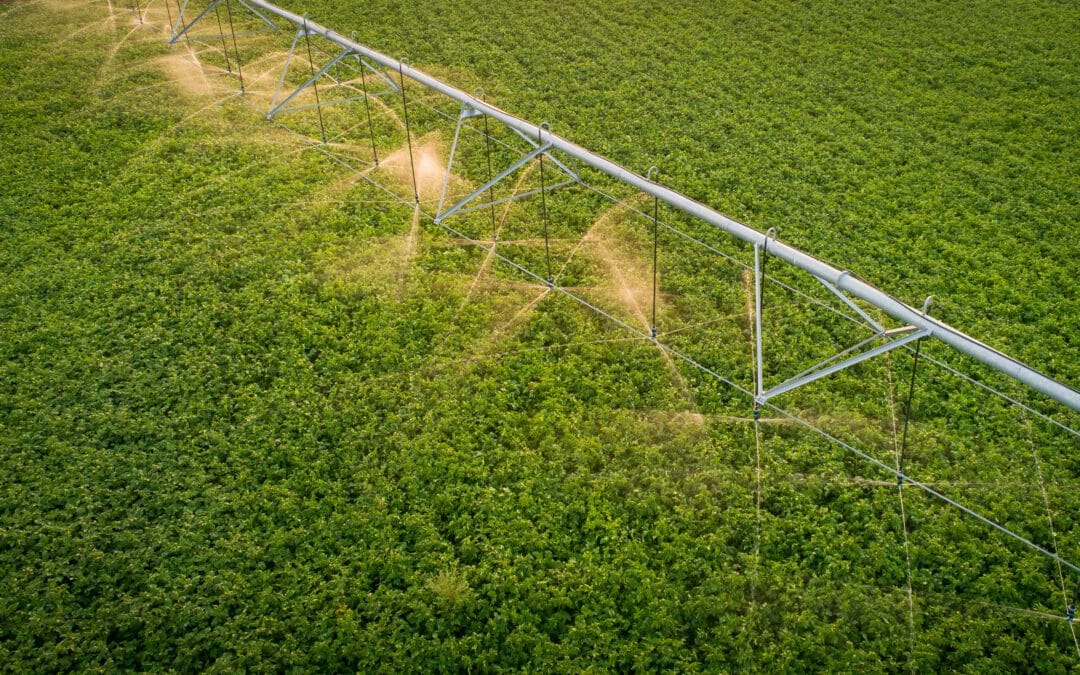
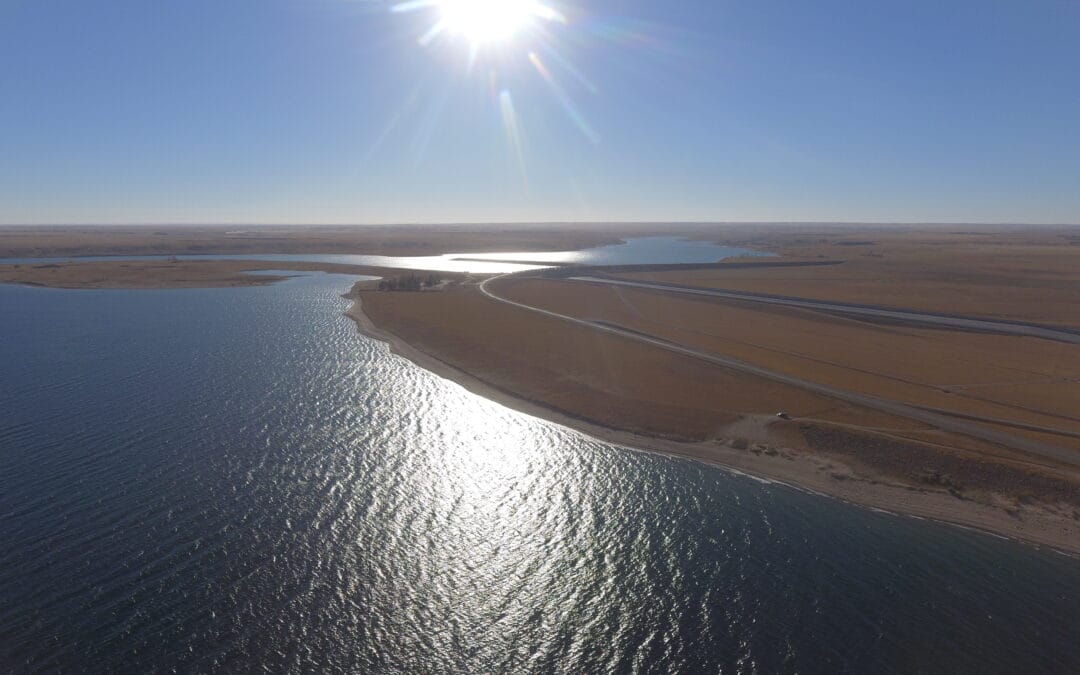
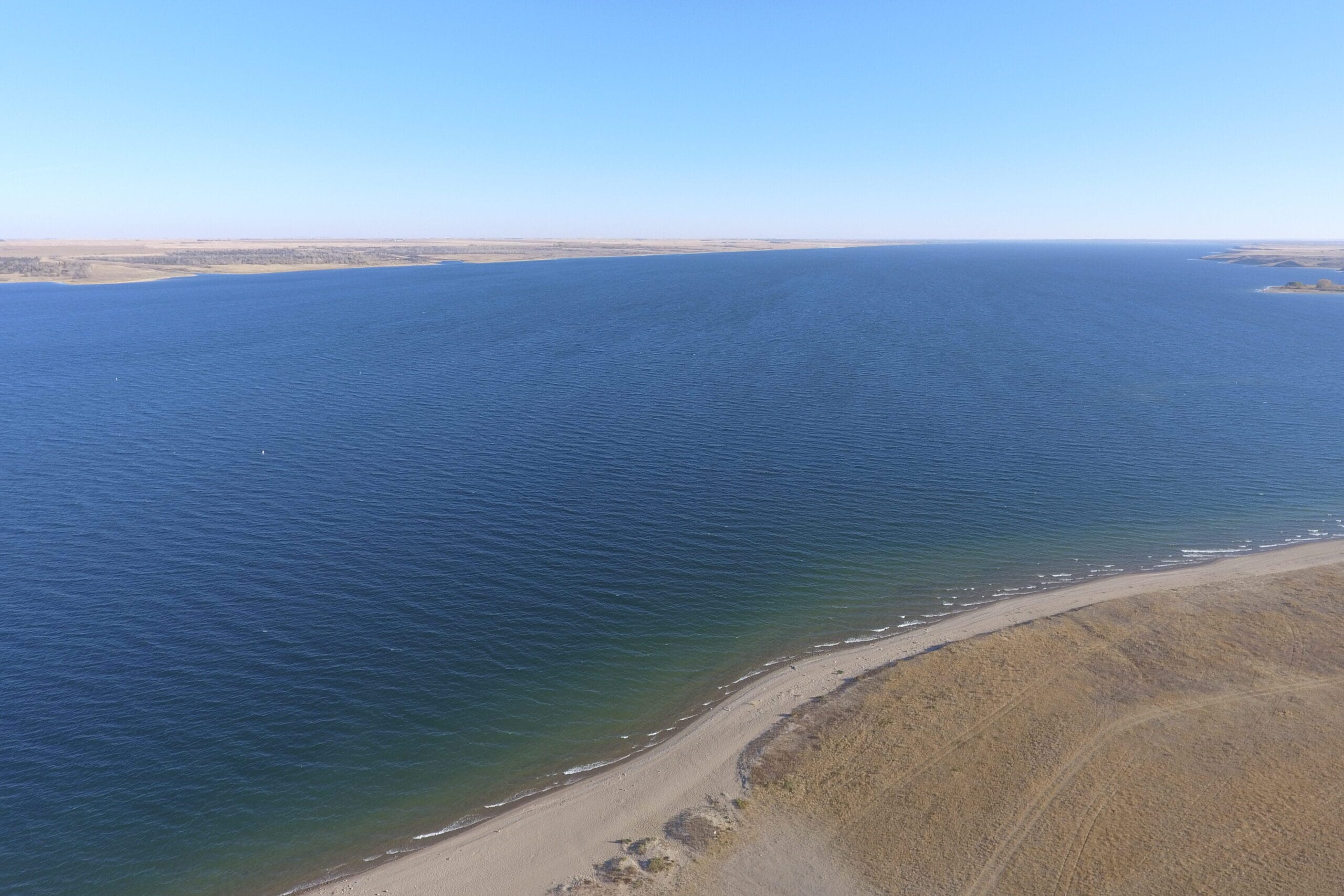
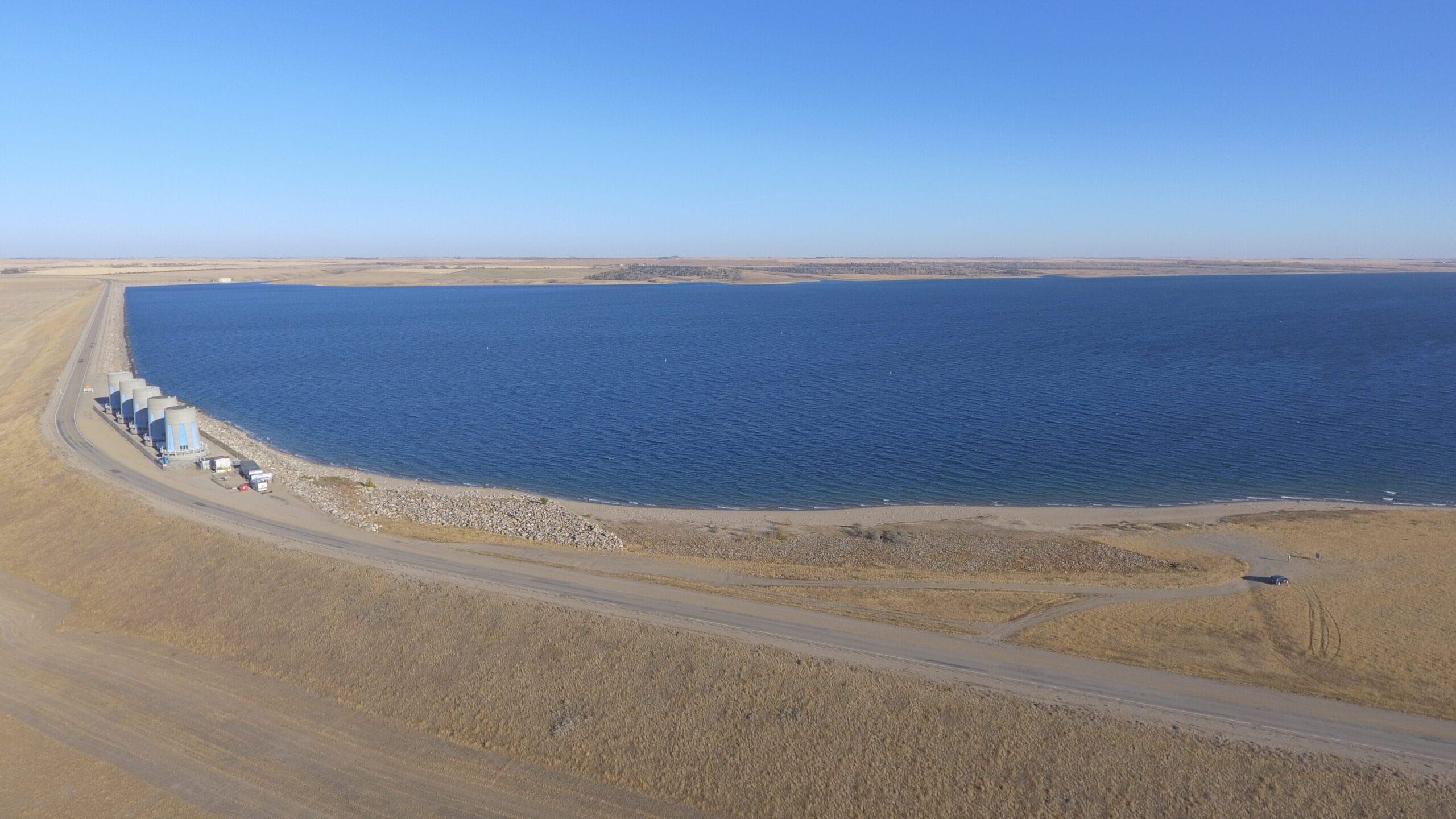
In this July 2026 introductory video, project leaders provide an overview of the Westside Irrigation Rehabilitation Project (WIRP), including its objectives, timeline and expected outcomes. The video highlights the importance of working collaboratively with First Nations, local communities and project partners to support the responsible stewardship and sustainable management of water resources for future generations.
The video discusses key topics such as water sustainability, the environmental assessment process and First Nations engagement throughout project planning and implementation.
When planning began for the Westside Irrigation Rehabilitation Project (WIRP) near Lake Diefenbaker in 2023, it was projected to be a sound investment opportunity for the entire province. It was also expected to be a model for future, cooperative irrigation expansion that would support provincial growth.
The potential for this project has been confirmed. The final economic analysis for the project, recently released by the Water Security Agency (WSA), surpasses initial expectations. The independent analysis, conducted by KPMG, shows a $12.9 billion Gross Domestic Product (GDP) impact while creating 80,000 person years of employment over the next 50 years.
“From the outset, we expected this project to deliver significant advantages for the province, benefiting all Saskatchewan residents,” said Honourable David Marit, Minister of Agriculture. “We are excited that those benefits are now validated.”
Over the past year, Prairie Engineering Partners—a team made up of Stantec and MPE Engineering—has been working hard to improve the design of the project. Their efforts have helped create clear and accurate cost estimates, moving the project closer to reality.
Thanks to these efforts, the project team unlocked an additional 10,000 acres of irrigable land – increasing the project from 90,000 to 100,000 acres – expanding the project’s reach and amplifying its impact.
“This isn’t just growth—it’s an opportunity to transform agriculture and strengthen our economy for decades to come,” added Marit. “This project is breathing new life into decades-old infrastructure and planting the seeds for agricultural growth for the future.”
Turning Investment into Value
Investments in infrastructure like WIRP are more than construction—they are nation-building initiatives that unlock long-term economic potential. Similar to transportation networks, modern irrigation systems move water to where it is most needed, stabilizing crop yields, reducing production risks and enabling diversification into higher-value crops. These improvements strengthen food security, appeal to private-sector investment and create opportunities for value-added processing.
The WIRP’s projected $12.9 billion GDP boost will do more than create new jobs; it will enhance the lives of all Saskatchewan residents through improved public services, higher wages and increased investment. These benefits, among others, lay the foundation for long-term prosperity that extends beyond those directly involved in irrigation efforts. WIRP exemplifies how strategic investments can truly transform a region and have ripple effects across a province.
Building the Future Together
While the province has played a key role in driving the development and planning of WIRP, its ultimate success will be driven by industry leaders like Irrigation Saskatchewan. David Bagshaw, Chair of Irrigation Saskatchewan, emphasized the significance of WIRP, calling it a transformative opportunity for the province.
“Our members are deeply committed to Saskatchewan’s future and to ensuring that every resident benefits from irrigation,” he said.
The Saskatchewan Association of Rural Municipalities (SARM) has also emerged as a steadfast advocate for WIRP, underscoring its importance during recent lobbying efforts in Ottawa.
“The initiative represents a transformative opportunity for rural communities and promises widespread benefits for residents across Saskatchewan and Canada,” SARM President Bill Huber said. “By championing this project at the federal level, we aim to ensure it receives the attention and support necessary to deliver on its potential for economic growth and agricultural resilience.”
Completing a Vision 50 Years in the Making
Although the project has laid idle for decades, the opportunity and potential for irrigation development that was started over 50 years ago with the construction of Lake Diefenbaker as a reservoir will now become reality. By investing in irrigation today, Saskatchewan is cultivating opportunities that will sustain generations to come.
Saskatchewan, the land of the living skies, known for its agricultural prowess and roll your sleeves up and get to work attitude, is not as often recognized as a global leader in sustainability, food security and processing. But the reality is, Saskatchewan is poised to play a key role in feeding a growing world while securing a prosperous future for generations to come.
This sounds like a large undertaking, but it is quite simple, just add water.
As global food demand rises and the challenge of ensuring food security intensifies, Saskatchewan sits with one of the largest untapped freshwater reserves. By utilizing irrigation, it offers a unique opportunity to cultivate high-value crops, support sustainable agricultural practices and drive economic growth.
The Government of Saskatchewan announced a plan that includes various projects designed to enhance and extend the reach of irrigation. These projects support the province’s 2030 Growth Plan, which aims to increase agriculture productivity, support economic diversification and ensure a sustainable water supply for future generations.
Irrigation Expansion
Irrigation expansion in Saskatchewan involves the creation of new, multi-user water supply systems. This process includes constructing new canals and pipelines and implementing modern irrigation technologies to improve water efficiency. The goal is to provide a reliable water source for agriculture and provide benefits for communities, recreation, industry, and the environment. Irrigation ensures that crops and livestock receive the necessary water to thrive even during periods of drought.
Projects Under Development
Currently, several key projects are underway as part of the province’s irrigation expansion efforts:
Westside Irrigation Rehabilitation Project: This project involves the rehabilitation and expansion of the existing Westside irrigation canal system, which will add 100,000 acres of irrigable land.
Duncairn Reservoir: Located near Swift Current, this reservoir supports multiple irrigation projects and municipal water supply. Recent assessments have identified additional water available for future irrigation development.
Quill Lakes Water Management: While primarily focused on addressing flooding and drainage issues, this project also explores opportunities for capturing quality water for irrigation expansion in the Quill Lakes Basin.
Old Wives Lake Watershed: A water availability and quality assessment was completed to address the growing demands for irrigation and economic development, improve water infrastructure operations, and ensure reliable water supplies for existing users. A RiverWare model was developed to evaluate current and future water management scenarios.
Lake Diefenbaker Planning Study: This project involves a feasibility study to assess the irrigation potential around Lake Diefenbaker. The study identified key development areas and cost estimates around the lake for future irrigation expansion.
Saskatoon Southeast Water Supply System (SSEWSS) Irrigation Expansion: In December 2022, 15,000 acres of allocation for non-district Irrigation was announced and is near completion in development. Currently a water management model is being developed to improve planning and operations for the SSEWSS system.
North Saskatchewan River: This project identified approximately 200,000 acres of potentially irrigable lands along the river. WSA’s next step is to engage with stakeholders in potential irrigation development blocks identified in the study to assess interest in development.
In addition to the projects the province is investing in, there has been over 81,000 irrigated acres added since the start of 2020 with the majority of those coming from private irrigation.
Benefits of Irrigation
The benefits of irrigation to Saskatchewan are significant. By “just adding water” to Saskatchewan’s fields through irrigation, it will create opportunities that extend far beyond farming. For producers, irrigation unlocks the potential to cultivate high-value crops such as fruits and vegetables, which require consistent water supplies and command higher market prices. With stable water access, producers can plan with confidence, mitigate the impacts of droughts and maximize yields.
This reliability leads to the establishment of value-added industries like food processing, packaging and distribution, all of which create jobs and inject wealth into the economy.
The ripple effects of irrigation expand into the province’s long-term prosperity. Projects like the Westside Irrigation Rehabilitation Project alone are expected to add a $5.9 billion to Saskatchewan’s economy. During its construction, the project will create 9,500 jobs and over time, it’s anticipated to generate more than 30,000 person-years of employment.
If value-added processing opportunities—such as food manufacturing—are factored in, the GDP impact could grow significantly, making irrigation one of the province’s most valuable long-term investments. The availability of water for irrigation can also act as a catalyst for industrial expansion. Industries that rely on a consistent water supply can benefit from the improved infrastructure.
The province has already seen success around Outlook. By adding water, what was once simply agricultural land has grown into a flourishing hub of value-added industries, turning Outlook into a vital part of Saskatchewan’s economy.
At Wolf Willow Winery, irrigation supports the cultivation of fruit, enabling the winery to produce fine wines and beverages. Nearby, Spring Creek Gardens operate over 2,000 acres, split between vegetables and potatoes, with facilities dedicated to washing, grading, packing and storing these crops for up to a full year. This ensures that Saskatchewan-grown produce is available well beyond harvest seasons, adding stability to the supply chain.
The numbers alone tell a remarkable story. Outlook hosts between 3,500 and 4,500 acres of potato production, yielding approximately 125 million pounds annually, a figure that underscores how irrigation fuels high-value crop production. Tuberosum Technologies Inc. takes this one step further, focusing on research and development to refine the efficiency and sustainability of potato farming. Meanwhile, Spudwyk Farms contributes to Canada’s culinary landscape by supplying The Little Potato Company, ensuring Saskatchewan-grown potatoes are enjoyed in households nationwide.
The pulse processing facility operated by Rudy Agro Ltd. specializes in irrigated crops such as marrowfat peas and dry edible beans, tapping into global markets and extending the reach of Saskatchewan’s agricultural outputs far beyond provincial borders. Additionally, Outlook’s irrigation system has supported the growth of 2,300 acres of seed canola in 2024, illustrating the broad range of crops that thrive under a reliable and consistent water supply.
This story and the benefits of irrigation stretch far beyond farming. It is about creating jobs, fostering innovation and building resilience. Irrigation enables producers to grow more, diversify their crops and reduce risks, further economic development and job creation in numerous different industries. The benefits of irrigation will be felt provincewide.
The irrigation expansion projects in Saskatchewan represent a step towards securing the future of the province’s agricultural sector and fostering economic growth. By increasing the amount of irrigable land, the project aims to provide a stable water supply, boost agricultural productivity and create jobs. As these projects moves forward, the Water Security Agency recognizes the importance to address environmental concerns and ensure that the benefits are shared equitably among all stakeholders, Indigenous communities, producers and the public.
Lake Diefenbaker has been an important part of the provincial fabric for residents in Saskatchewan for decades. Whether you know it or not, almost all of us are impacted by this reservoir. Supplying drinking water, generating hydroelectric power, fueling recreation and supporting agriculture, Lake Diefenbaker plays a vital role for us all. The Westside Irrigation Rehabilitation Project (WIRP) looks to further expand that role by adding 100,000 irrigated acres.
While the lake’s resume is impressive, concerns over the lake running out of water are understandable given the importance of the lake to over 60 per cent of the province’s population.
The Water Security Agency (WSA) analyzed 88 years of flow data to understand how much water is available to be used. They found that under normal operations, the lake has an annual water availability of nearly 900,000 acre-feet without interfering with municipal use, hydropower or recreational use.
Of that additional 900,000 acre-feet, the Westside Irrigation Rehabilitation Project is estimated to use 100,000 acre-feet of that water, meaning there is plenty of water available for this project and more.
In practical terms, the amount of water required for the Westside Irrigation Rehabilitation Project would be less than a foot of water from the lake.
Another way to measure how much water is available is through inflow (the amount of water flowing into the lake from rivers and other sources). Only about nine per cent of Lake Diefenbaker’s average annual inflow is currently used. The Westside Irrigation Rehabilitation Project is expected to raise that by approximately two per cent.
For context, natural evaporation alone accounts for three to four per cent of the lake’s annual inflow—meaning the increase in water use from the project is still lower than what nature takes on its own.
Where the Water Comes From
Understanding Lake Diefenbaker’s water sources helps put things into perspective.
Around 70 to 80 per cent of lake inflows originate in Alberta through snow melt and seasonal rainfall. Saskatchewan relies on natural cycles in Alberta, meaning that we are not solely dependent on local precipitation and run off. Instead, natural inflows from Alberta play a critical role in reservoir levels.
Moreover, many climate models predict increased water flows in the South Saskatchewan River system due to climate change. While water flow predictability may shift, experts expect higher overall volumes rather than shortages. But, there could be more prolonged periods of dry cycles, making the ability to capture and store water even more important.
A Multi-Use Reservoir Requires Balance
Lake Diefenbaker serves multiple roles, which means that water management is key to ensuring each sector gets the supply it needs.
For flood control, managers must sometimes lower lake levels to create space for excess water during high inflow seasons. Conversely, for municipal and agricultural use, levels must be kept high enough to ensure a stable supply throughout the year.
Each winter, the lake is drawn down for hydroelectric generation, typically reducing its elevation to approximately 551 metres above sea level. This allows space for prairie snowmelt, mountain runoff and rainfall to refill the lake in the coming spring, often raising it by more than four metres to normal levels for summer.
For recreation, boaters benefit from target elevation levels, ensuring harbors and access points remain functional. Although, some years when inflows are lower this can be impacted; but this speaks to needing that balance for all uses.
The Role of Water Agreements
Saskatchewan’s water usage isn’t just about internal management—it is also governed by the Prairie Provinces Water Board Master Agreement on Apportionment, a 1969 treaty ensuring Alberta, Saskatchewan and Manitoba share water equitably.
Under this agreement, each province must pass 50 per cent of volume by the year to its downstream neighbours. Alberta is also required to maintain a minimum flow of 42.5 cubic metres per second at the border, ensuring Saskatchewan gets its fair share before passing half of its own natural flows downstream to Manitoba.
In the event that there is a water shortage, the Water Security Agency has the Water Shortage Policy, which provides direction for water management decisions and actions.
Concerns about Lake Diefenbaker’s future are understandable, but the data overwhelmingly supports the province’s ability to expand irrigation without jeopardizing long-term water security.
While there will be enough water for the project, it is also about careful management of Lake Diefenbaker that will ensure long-term sustainability allowing irrigation to expand while ensuring the water availability in the lake remains for generations to come.
Saskatchewan has a unique opportunity to strengthen its agricultural economy while protecting the environment and meeting the needs of current users—by prioritizing sustainable water management, balancing flood control with municipal needs, and leveraging one of Canada’s largest water reserves.